

What Is the Difference Between Hydraulic and Mechanical Diaphragm Pumps?
Diaphragm pumps are widely used in chemical dosing and industrial fluid handling because of their leak-free operation, strong chemical resistance, and precise flow control. Among the various diaphragm pump designs, mechanical diaphragm pumps and hydraulic diaphragm pumps are two of the most common types. While both rely on a flexible diaphragm to displace fluid, their internal drive mechanisms, performance characteristics, and ideal application scenarios differ significantly.
Understanding these differences is critical when selecting a pump for long-term reliability, accuracy, and operational safety. This article provides a detailed technical comparison of hydraulic and mechanical diaphragm pumps, focusing on working principles, performance behavior, maintenance requirements, and typical use cases.
Fundamental Operating Principles
Mechanical Diaphragm Pumps
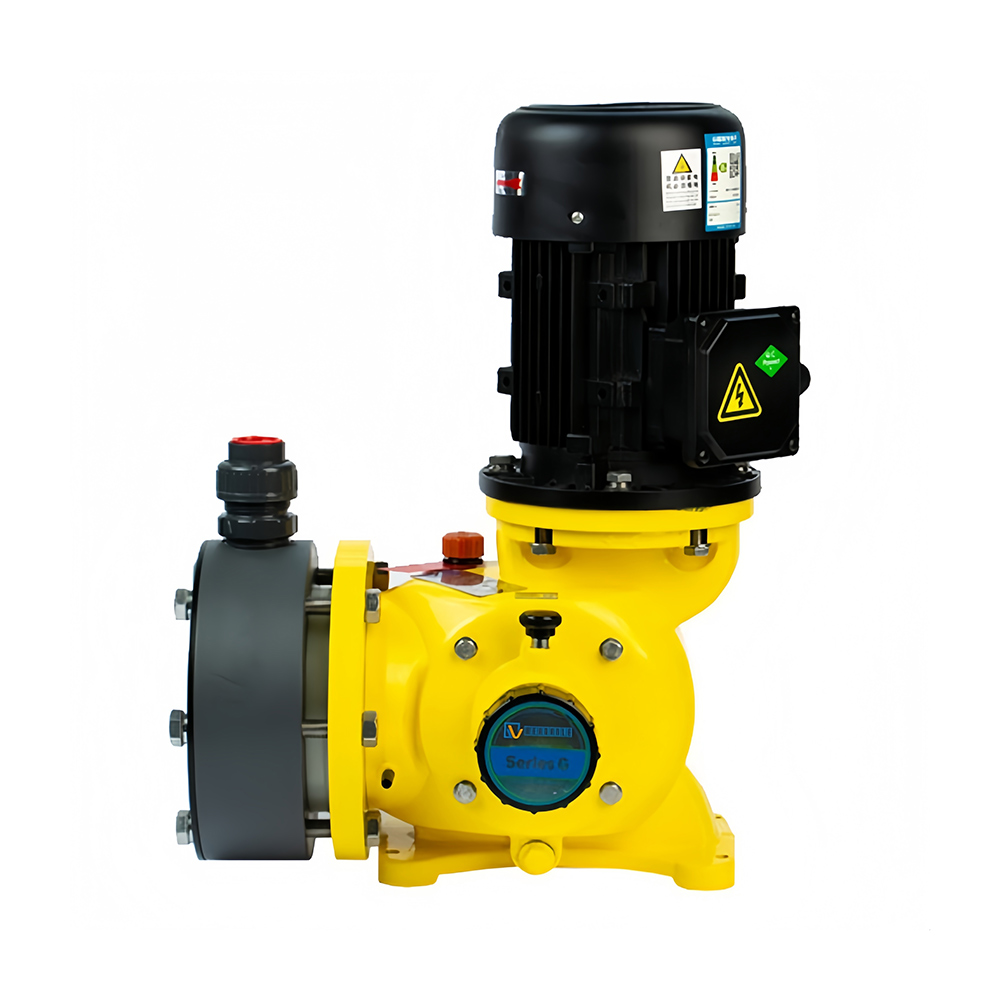
A mechanical diaphragm pump uses a direct mechanical linkage —typically a crankshaft, cam, or eccentric mechanism—connected to an electric motor. As the motor rotates, the linkage converts rotary motion into reciprocating movement, which flexes the diaphragm back and forth.
During the suction stroke, the diaphragm retracts, creating a vacuum that draws fluid into the pump chamber through the inlet check valve. During the discharge stroke, the diaphragm advances, pushing fluid out through the outlet check valve. The diaphragm serves as a physical barrier between the process fluid and the drive components, preventing leakage and contamination.
Because the diaphragm motion is mechanically fixed, the stroke length and frequency are predictable , allowing consistent dosing over time. However, the diaphragm is directly exposed to process pressure, which limits the maximum discharge pressure the pump can safely handle.
Hydraulic Diaphragm Pumps
Hydraulic diaphragm pumps introduce an intermediate hydraulic oil system between the drive mechanism and the process diaphragm. Instead of directly moving the diaphragm, a piston or plunger displaces hydraulic oil inside a sealed chamber. This pressurized oil then evenly deflects the diaphragm.
This indirect actuation offers several advantages. The hydraulic oil distributes force uniformly across the diaphragm surface, significantly reducing mechanical stress and deformation. Internal relief valves and oil compensation systems automatically protect the diaphragm from overpressure conditions.
As a result, hydraulic diaphragm pumps are capable of operating at much higher pressures while maintaining exceptional accuracy and long diaphragm life.
Pressure Capability and Accuracy
One of the most significant differences between the two pump types lies in pressure handling and dosing precision .
Mechanical diaphragm pumps are typically suited for low to medium pressure applications . Their accuracy is reliable under stable system conditions, but variations in discharge pressure can slightly affect flow consistency, especially in demanding processes.
Hydraulic diaphragm pumps, by contrast, maintain near-constant displacement per stroke , even under fluctuating backpressure. This makes them ideal for high-pressure chemical injection, pipeline dosing, and process-critical applications where accuracy deviations are unacceptable.
Maintenance and Reliability Considerations
Mechanical diaphragm pumps are valued for their simple construction . With fewer internal components and no hydraulic oil circuit, maintenance is straightforward. Diaphragm replacement is typically quick, and troubleshooting is relatively simple. However, because the diaphragm is directly exposed to system pressure and mechanical stress, replacement intervals may be shorter in aggressive or high-duty applications.
Hydraulic diaphragm pumps require more complex maintenance. The hydraulic oil system must be kept clean and properly filled, and internal valves may require periodic inspection. Despite this added complexity, hydraulic pumps often achieve longer diaphragm service life , especially in continuous-duty or high-pressure environments.
Chemical Compatibility and Fluid Handling
Both pump types can be constructed using chemically resistant diaphragm materials such as PTFE or elastomers, allowing them to handle corrosive acids, alkalis, and additives.
Mechanical diaphragm pumps are well suited for:
- Moderate chemical dosing
- Water treatment additives
- Enzyme and biological fluids
- Low to medium viscosity chemicals
Hydraulic diaphragm pumps are better suited for:
- Aggressive or hazardous chemicals
- High-pressure injection systems
- Toxic fluids requiring secondary containment
- Continuous industrial processes with minimal tolerance for failure
Application Suitability
The choice between mechanical and hydraulic diaphragm pumps often depends on the process environment rather than the chemical alone .
Mechanical diaphragm pumps are commonly used in:
- Water and wastewater treatment systems
- Cooling water chemical dosing
- Bio-energy and enzyme addition
- Industrial process water conditioning
- Medium-pressure chemical transfer
Hydraulic diaphragm pumps are preferred in:
- Chemical and petrochemical processing
- High-pressure pipeline injection
- Metallurgical and smelting applications
- Power generation water treatment
- Processes requiring ATEX or enhanced safety compliance
Comparative Overview
| Parameter | Mechanical Diaphragm Pump | Hydraulic Diaphragm Pump |
| Drive Mechanism | Direct mechanical linkage | Hydraulic oil displacement |
| Pressure Capability | Low to medium | Medium to very high |
| Dosing Accuracy | Good under stable pressure | Excellent, pressure-independent |
| Diaphragm Stress | Higher localized stress | Evenly distributed stress |
| Maintenance Complexity | Low | Moderate |
| Diaphragm Service Life | Moderate | Long |
| System Protection | Limited | Built-in hydraulic protection |
| Typical Applications | Water treatment, bio-processes | Chemical processing, high-pressure injection |
Selecting the Right Pump Type
When choosing between mechanical and hydraulic diaphragm pumps, several factors should be evaluated together:
Operating pressure : High-pressure systems favor hydraulic designs.
Process criticality : Tight accuracy requirements benefit from hydraulic stabilization.
Maintenance philosophy : Simpler systems may prefer mechanical designs.
Chemical hazard level : High-risk fluids justify hydraulic protection.
Lifecycle cost : Initial cost versus long-term reliability must be balanced.
Mechanical diaphragm pumps offer an excellent balance of reliability, simplicity, and cost-effectiveness for many industrial dosing applications. Hydraulic diaphragm pumps, while more complex, deliver superior performance where pressure, safety, and precision are non-negotiable.
Both mechanical and hydraulic diaphragm pumps play essential roles in modern chemical dosing and fluid handling systems. Mechanical diaphragm pumps excel in applications requiring straightforward operation, ease of maintenance, and dependable performance under moderate pressures. Hydraulic diaphragm pumps extend these capabilities into high-pressure, high-risk environments, offering enhanced protection, accuracy, and durability.
By understanding the engineering principles behind each design and aligning them with process requirements, operators can achieve safer operation, longer equipment life, and more stable dosing performance across a wide range of industrial applications.
