

How Does an Electromagnetic Dosing Pump Improve Chemical Dosing Accuracy?
In many industrial processes, adding chemicals is not simply a matter of "more or less." A slight deviation in dosage can affect product quality, increase chemical consumption, or even lead to environmental compliance issues. Whether it is pH adjustment in wastewater treatment or additive feeding in battery material production, modern processes are demanding a level of precision that traditional dosing methods often struggle to achieve.
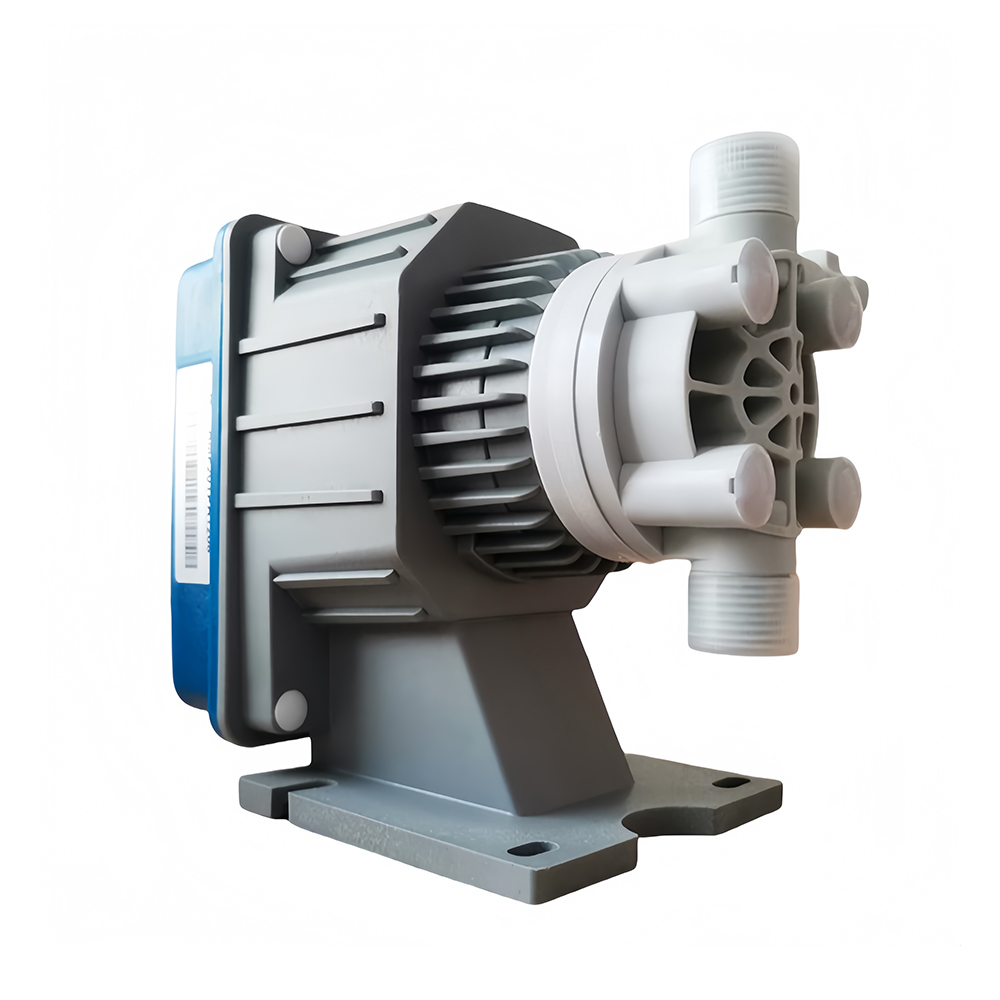
This is one reason why the Electromagnetic dosing pump has become increasingly popular in water treatment, chemical manufacturing, laboratories, and emerging industries such as new energy production.
The question is no longer whether chemicals can be added to the system.
The real question is:
Can the right amount be added consistently, repeatedly, and at exactly the right moment?
Precision Starts with a Different Driving Principle
Unlike mechanically driven dosing pumps that rely on motors, gears, and transmission components, an Electromagnetic dosing pump uses electromagnetic pulses to drive diaphragm movement directly.
At first glance, the difference may seem purely technical. In practice, however, this design removes many of the variables that traditionally affect dosing consistency.
Each electromagnetic pulse generates a highly repeatable stroke. Because there are fewer moving parts involved in the transmission process, there are fewer opportunities for mechanical wear to introduce variations in output.
A useful way to think about it is this:
| Pump Type | Potential Sources of Error |
|---|---|
| Mechanical dosing pump | Gear wear, transmission loss, mechanical backlash |
| Electromagnetic dosing pump | Primarily fluid and system conditions |
Reducing the number of variables often results in more stable dosing performance over long operating periods.
Why Small Flow Rates Are Often the Biggest Challenge
Many industrial users assume that large-volume chemical injection is difficult while small-volume dosing is easy.
The opposite is often true.
Delivering 100 liters per hour with reasonable accuracy is relatively straightforward. Delivering a few milliliters per minute consistently over weeks or months is significantly more challenging.
Applications such as:
▶ Sodium hypochlorite dosing
▶ pH correction
▶ Laboratory reagent feeding
▶ Trace additive injection
▶ Catalyst dosing
all require extremely stable low-flow performance.
Traditional pumps operating near the bottom of their adjustment range can sometimes struggle with repeatability. An Electromagnetic dosing pump, however, is particularly well suited to this operating window because stroke frequency can be controlled very precisely without sacrificing consistency.
For users dealing with expensive chemicals, this difference quickly becomes visible on purchasing reports.
Accuracy Is About More Than the Pump Itself
One of the biggest misconceptions in chemical dosing is the belief that installing a high-precision pump automatically guarantees high-precision dosing.
Unfortunately, real systems are rarely that simple.
Several external factors continue to influence overall accuracy:
▶ unstable suction conditions;
▶ fluctuating discharge pressure;
▶ air trapped inside pipelines;
▶ changes in chemical viscosity;
▶ poor calibration practices.
An advanced Electromagnetic dosing pump cannot completely eliminate these issues, but it can reduce the amount of error introduced by the pump itself, making system optimization easier and more predictable.
In many cases, improving pump precision allows engineers to identify and solve process problems that were previously hidden by larger dosing fluctuations.
The Real Benefits Become Visible Over Time
When discussing dosing accuracy, many users initially focus on percentages and specifications.
In reality, the benefits usually appear elsewhere.
After several months of operation, operators often notice:
▶ lower chemical consumption;
▶ fewer manual adjustments;
▶ more stable process parameters;
▶ reduced product variability;
▶ less frequent recalibration.
One wastewater treatment operator described the experience in a simple way:
"The biggest change wasn't that the numbers became smaller. It was that we stopped worrying about them."
That may be one of the most valuable forms of accuracy an industrial system can provide.
Automation Makes Precision Even More Valuable
Modern production environments rarely rely on standalone equipment anymore.
Today's Electromagnetic dosing pump systems are increasingly integrated with:
▶ PLC control systems;
▶ flow meters;
▶ pH sensors;
▶ ORP analyzers;
▶ SCADA monitoring platforms.
Instead of operating at a fixed output, the pump can automatically adjust dosing according to changing process conditions.
For example:
If water flow increases by 20%, chemical addition can increase proportionally.
If pH values begin to drift, dosing rates can automatically compensate.
This type of closed-loop control not only improves product quality but also reduces the need for continuous operator intervention.
The result is not simply automation.
It is consistency.
Where High-Precision Dosing Creates the Greatest Value
Although almost any dosing application can benefit from improved accuracy, certain industries gain particularly significant advantages.
| Industry | Typical Chemicals |
|---|---|
| Water treatment | Sodium hypochlorite, PAC, PAM, pH adjusters |
| Chemical processing | Acids, alkalis, catalysts |
| New energy manufacturing | Copper foil additives, electrolyte additives |
| Bioenergy | Enzymes and nutrient additives |
| Laboratories | Reagents and analytical chemicals |
In these applications, over-dosing can increase costs rapidly, while under-dosing may compromise product quality or process stability.
The margin for error is often surprisingly small.
When Stability Becomes the Most Noticeable Upgrade
Interestingly, users upgrading from conventional dosing equipment to an Electromagnetic dosing pump rarely talk first about stroke frequency, response time, or dosing curves.
Instead, they mention things like:
"The process became easier to manage."
"We stopped adjusting settings every few days."
"Chemical usage became more predictable."
Those practical experiences often matter more than technical specifications.
Systems such as the high-precision electromagnetic dosing solutions offered by Wearable Tech are designed with exactly this goal in mind: combining accurate pulse control, stable long-term performance, and compatibility with industrial automation platforms for applications ranging from water treatment to new energy manufacturing.
Ultimately, precision is not valuable because it produces impressive numbers on a datasheet.
It matters because it makes the entire process more reliable.

Accuracy Is Becoming a Competitive Advantage
Industrial dosing has evolved considerably over the past decade.
Simply moving chemicals from one tank to another is no longer enough. Manufacturers now expect dosing systems to support cost reduction, process stability, environmental compliance, and automation goals simultaneously.
The role of the Electromagnetic dosing pump is therefore changing as well.
It is no longer just a piece of equipment in the pipeline.
Increasingly, it is becoming one of the key tools for building smarter and more efficient chemical dosing systems.
