

What Factors Affect the Accuracy of a Digital Dosing Pump?
What Factors Affect the Accuracy of a Digital Dosing Pump?
In modern industrial processes, accurate chemical dosing is essential for maintaining product quality, reducing operating costs, and ensuring process stability. Whether in wastewater treatment, chemical manufacturing, bioenergy production, or new energy applications, a Digital Dosing Pump plays a critical role in delivering precise amounts of chemicals at the right time. However, even the most advanced dosing equipment can experience accuracy issues if certain factors are overlooked.
So, what exactly affects the accuracy of a digital dosing pump?
Pump Calibration and Setup
One of the most important factors is proper calibration. A Digital Chemical Dosing Pump may be programmed to deliver a specific flow rate, but if the calibration does not reflect actual operating conditions, the output can deviate from the target value.
Factors such as fluid density, viscosity, and temperature can influence dosing performance. Regular calibration ensures that the pump continues to deliver accurate chemical volumes even as process conditions change.
For facilities that rely heavily on precise chemical addition, routine calibration should be considered a standard maintenance practice rather than an occasional adjustment.
Fluid Characteristics
Not all chemicals behave the same way. Some liquids are highly viscous, while others may contain suspended particles or exhibit temperature-sensitive properties.
These characteristics can directly impact dosing accuracy. For example:
- ›High-viscosity chemicals may flow more slowly through the system.
- ›Temperature changes can alter fluid density.
- ›Entrained air bubbles may interrupt consistent dosing.
A High Precision Digital Dosing Pump is typically designed to handle a wide range of media, but understanding the properties of the chemical being dosed remains essential for achieving optimal performance.
Suction and Discharge Conditions
The accuracy of a Chemical Dosing System depends not only on the pump itself but also on the surrounding piping system.
Common issues include:
ISSUE 01
Air leaks in the suction line
ISSUE 02
Excessive suction lift
ISSUE 03
Blocked filters or strainers
ISSUE 04
Unstable discharge pressure
Even a small amount of air entering the system can lead to inconsistent dosing volumes. Likewise, fluctuating back pressure may affect the pump's ability to deliver a stable flow rate.
Proper installation and regular inspection of the piping system can significantly improve dosing consistency.
Control Signals and Automation Integration
One of the biggest advantages of a Digital Dosing Pump is its ability to integrate with automated control systems. However, inaccurate or unstable control signals can reduce overall precision.
Many industrial dosing systems rely on PLC controls, flow meters, sensors, and 4–20 mA signals. If these devices provide incorrect data, the pump may respond with inaccurate dosing adjustments.
To maximize accuracy, operators should regularly verify signal quality and ensure that all automation components are functioning correctly.
Mechanical Wear Over Time
Like any industrial equipment, dosing pumps experience wear during long-term operation. Components such as diaphragms, valves, seals, and drive mechanisms gradually degrade over time.
As wear increases, dosing performance may slowly drift away from its original specifications. The changes are often subtle at first, making them difficult to detect without routine performance checks.
Preventive maintenance helps identify potential issues before they affect process quality or increase chemical consumption.
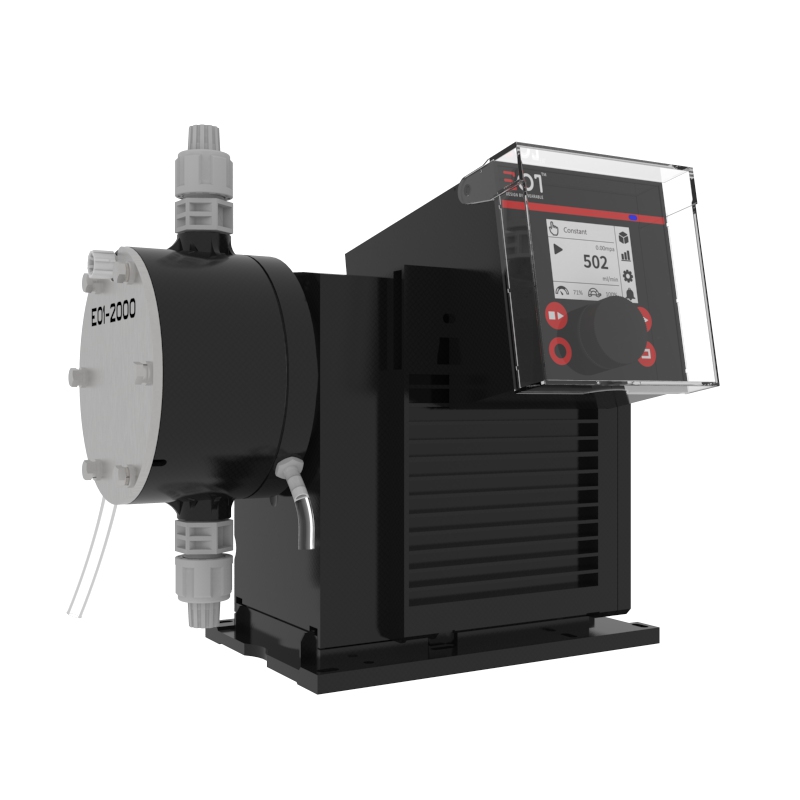
My Experience with High-Precision Digital Dosing Systems
Accuracy Factors at a Glance
| Factor | Key Impact on Accuracy |
|---|---|
| Pump Calibration | Ensures output matches target flow under real conditions |
| Fluid Characteristics | Viscosity, temperature, and air bubbles affect flow consistency |
| Piping Conditions | Air leaks and back pressure disrupt stable dosing volumes |
| Control Signals | Faulty PLC or sensor data leads to incorrect adjustments |
| Mechanical Wear | Degraded components cause performance drift over time |
