

How to Choose a Chemical Pump for Corrosive Fluids ?
Selecting a pump for chemical handling is very different from choosing a standard water pump. Acids, alkalis, solvents, oxidizing agents, and other aggressive liquids can attack pump materials, damage seals, and create serious leakage risks if the equipment is not properly matched to the application.
For this reason, choosing a corrosion-resistant chemical pump should begin with the properties of the liquid and the actual operating conditions rather than simply looking at flow rate or purchase price. A properly selected pump can provide stable fluid transfer, reduce maintenance requirements, and improve safety throughout the production process.
Start with the Chemical You Need to Handle
The first question when selecting a chemical pump should be: What exactly will the pump transfer?
Different chemicals have very different effects on materials. Sulfuric acid, hydrochloric acid, nitric acid, sodium hydroxide, hydrogen peroxide, solvents, and salt solutions cannot simply be treated as interchangeable fluids.
The chemical concentration and operating temperature are also important. A material that performs well with a diluted chemical may not provide the same resistance at higher concentrations or temperatures.
Before selecting a pump, users should therefore identify:
-
▶ Chemical name and concentration
-
▶ Operating and maximum temperature
-
▶ Fluid viscosity and density
-
▶ Presence of suspended solids
-
▶ Required flow rate
-
▶ Required discharge pressure
This information provides the foundation for selecting the appropriate pump construction and wetted materials.
Why Material Compatibility Matters
For corrosive applications, the materials that come into direct contact with the liquid are particularly important. If the wetted components are chemically incompatible, corrosion can gradually weaken the pump and eventually result in leakage, reduced performance, or premature replacement.
A corrosion-resistant chemical pump may use materials such as fluoroplastics, stainless steel, or high-grade composite materials depending on the application. The correct choice depends on the specific chemical rather than simply choosing the material considered “most corrosion resistant.”
For example, aggressive acids and alkalis may require highly resistant non-metallic materials, while other chemical transfer applications may benefit from stainless-steel construction.
The objective is not simply to choose the strongest material, but to choose a material that provides reliable chemical compatibility under actual operating conditions.
Consider Flow Rate and Pressure Together
Chemical pump selection cannot be based on flow rate alone.
A pump may need to transfer a relatively small amount of liquid but overcome considerable discharge resistance. Conversely, a high-flow application may operate at relatively low pressure.
Before selecting the pump, determine the required:
| Selection Parameter | Why It Matters |
| Flow rate | Determines how much chemical must be transferred per unit of time |
| Discharge pressure | Determines the resistance the pump must overcome |
| Fluid temperature | Influences chemical behavior and material resistance |
| Viscosity | Affects pump performance and power requirements |
| Chemical concentration | Determines material compatibility |
| Solids content | Influences wear and internal component selection |
A pump that is significantly oversized may operate inefficiently, while an undersized pump may struggle to meet process requirements. The best chemical pump is one that operates reliably within the actual working range of the system.
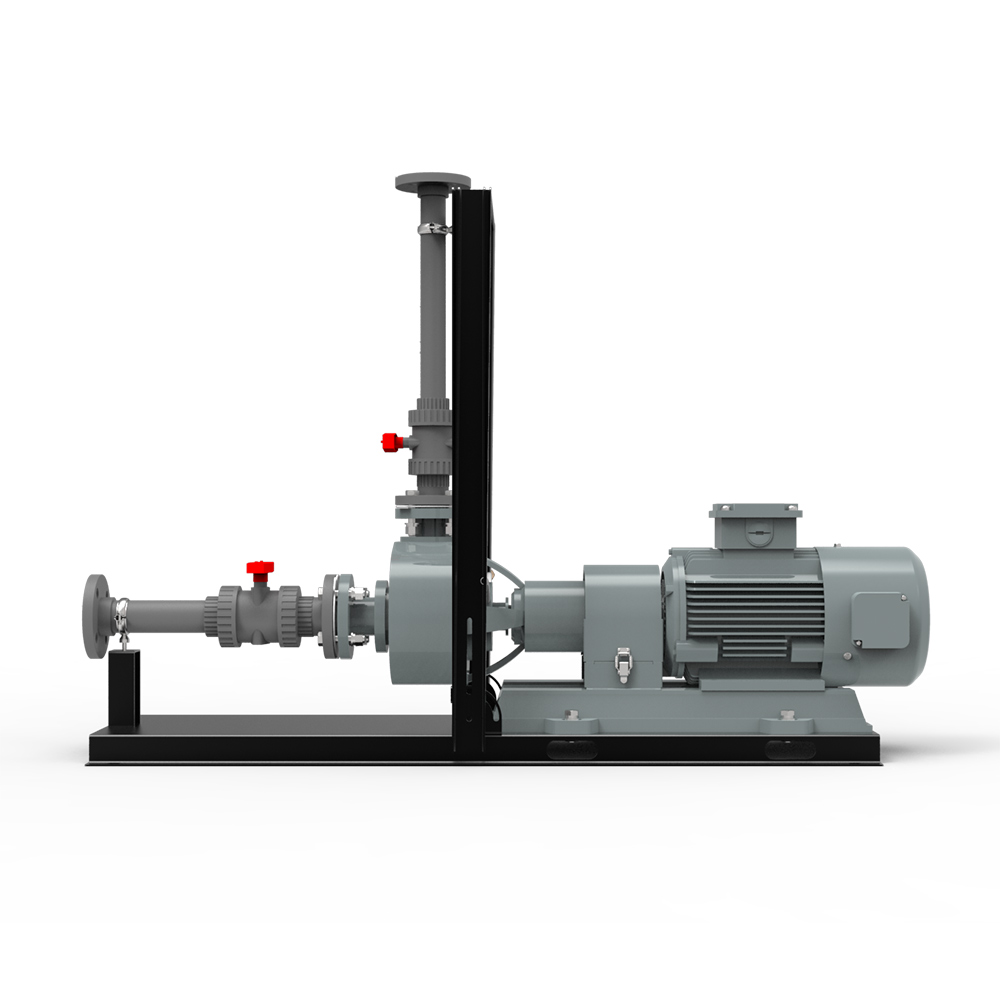
Don't Overlook Sealing and Leakage Protection
Leakage is a particularly important consideration when handling corrosive or hazardous chemicals. Even a pump constructed from chemically resistant materials can create problems if its sealing system is poorly matched to the application.
Depending on the pump configuration, different sealing approaches may be appropriate. Magnetic-drive designs can reduce leakage risk by eliminating a conventional dynamic shaft seal, while diaphragm-based designs can provide another approach for containing aggressive liquids.
The appropriate solution depends on factors such as:
-
▶ Chemical toxicity
-
▶ Operating pressure
-
▶ Temperature
-
▶ Required leakage protection
-
▶ Maintenance requirements
For applications where chemical leakage could affect personnel, equipment, or the surrounding environment, sealing should be considered a primary selection factor rather than an afterthought.
Choose the Pump Type According to the Process
There is no single pump design that is ideal for every chemical application. The required flow, pressure, viscosity, solids content, and dosing or transfer method should determine the appropriate configuration.
For example, centrifugal chemical pumps can be suitable for continuous transfer of compatible, relatively low-viscosity liquids, while diaphragm or other positive-displacement designs may be preferable when controlled dosing or difficult fluids are involved.
For applications requiring reliable handling of corrosive liquids, a properly configured corrosion-resistant chemical pump provides an important combination of chemical compatibility, stable fluid transfer, and equipment protection.
Where Are Corrosion-Resistant Chemical Pumps Used?
Chemical pumps are not limited to chemical factories. Their applications extend across many industries where aggressive or reactive liquids must be safely transferred.
Typical applications include:
-
▶ Wastewater treatment: Acid, alkali, coagulant, and neutralizing-agent transfer
-
▶ Chemical processing: Reactive chemicals, solvents, and process liquids
-
▶ New energy manufacturing: Battery-related chemicals and electrolyte-related processes
-
▶ Metallurgy: Acid solutions and chemical treatment processes
-
▶ Printing and dyeing: Dyes, bleaching agents, and chemical additives
-
▶ Mining and beneficiation: Chemical reagents used for mineral separation
-
▶ Laboratories: Controlled transfer of corrosive or temperature-sensitive liquids
-
▶ Pulp and paper: Bleaching chemicals and pH-control solutions
These applications can have very different operating conditions, which is why application-specific selection is more important than simply choosing a general-purpose pump.
Why Choose a Corrosion-Resistant Chemical Pump?
When a pump is used with aggressive chemicals, reliability should be evaluated over the entire operating life rather than only by its initial purchase price.
A properly selected chemical pump can help reduce:
Unplanned downtime by resisting chemical degradation.
Maintenance frequency through appropriate material and sealing selection.
Leakage risks through suitable containment and sealing configurations.
Replacement costs by maintaining structural integrity under demanding conditions.
Wearable Technology's chemical pump is designed for transferring and circulating corrosive or hazardous liquids across demanding industrial applications. The product page describes compatibility with acids, alkalis, oxidizers, salt solutions, petrochemicals, and other aggressive media, with corrosion-resistant material options and configurations suitable for different flow and pressure requirements.
A Practical Selection Checklist
Before purchasing a corrosion-resistant chemical pump, it is useful to provide the manufacturer with complete operating information rather than only asking for a price.
At minimum, specify:
-
The chemical and concentration
-
Required flow rate
-
Discharge pressure or system head
-
Operating and maximum temperature
-
Fluid viscosity and density
-
Whether solids or particles are present
-
Installation environment
-
Required leakage protection
-
Continuous or intermittent operation
Providing these details allows the manufacturer to evaluate material compatibility, pump configuration, power requirements, and sealing options more accurately.
Selecting for the Application, Not Just the Pump
The right chemical pump is not necessarily the most powerful or most expensive option. It is the one that matches the chemical properties, process requirements, safety conditions, and expected operating environment.
For corrosive liquid handling, material compatibility should come first, followed by flow, pressure, temperature, sealing, and maintenance requirements. When these factors are considered together, a corrosion-resistant chemical pump can provide much more than basic fluid transfer—it can become a reliable part of the overall chemical handling system.
For users dealing with acids, alkalis, oxidizers, or other aggressive liquids, working with a manufacturer that can evaluate the complete operating condition is often the safest way to avoid costly mismatches and achieve dependable long-term performance.
