

How Does Temperature Affect Chemical Pump Material Compatibility?
A chemical pump may perform reliably when transferring a solution at room temperature, yet experience corrosion, deformation, or premature seal failure when the operating temperature increases. Why does this happen even when the chemical being handled remains unchanged?
The answer lies in chemical pump material compatibility. A material's resistance to chemical exposure is influenced not only by the type of fluid but also by its temperature, concentration, pressure, and exposure duration. Understanding these relationships is essential when selecting a pump for demanding industrial processes.
Why Does Temperature Change Chemical Pump Material Compatibility?
Temperature can influence both the chemical resistance and mechanical properties of pump materials.
Higher temperatures may accelerate chemical reactions between a fluid and the pump's wetted components. A material that performs well under ambient conditions may experience faster corrosion, swelling, or degradation at elevated temperatures.
Temperature also affects mechanical performance. Certain thermoplastics may lose stiffness or become more susceptible to deformation as temperatures rise, while some materials become increasingly brittle in low-temperature environments.
Another important consideration is thermal expansion. Pump casings, sealing components, and connecting parts may expand at different rates during temperature changes. If these differences are not considered during material selection and pump design, sealing reliability can be affected.
Therefore, chemical resistance at room temperature should never be treated as sufficient evidence of compatibility across an entire operating temperature range.

How Do Different Pump Materials Respond to Temperature Changes?
Chemical pumps use different construction materials depending on the characteristics of the fluid and operating environment. Each material has advantages, but its suitability must be evaluated under actual process conditions.
| Pump Material | Temperature-Related Characteristics | Key Selection Considerations |
| Polypropylene (PP) | Offers resistance to many chemicals, but stiffness and pressure capability may decrease at elevated temperatures | Maximum operating temperature, concentration, and pressure |
| PVDF | Provides strong chemical resistance and broader temperature capability than PP in many applications | Chemical-specific compatibility and continuous operating conditions |
| Stainless Steel | Offers mechanical strength across a broad temperature range, but corrosion resistance depends on the fluid | Chloride content, chemical concentration, and temperature |
| PTFE | Provides broad chemical resistance, although creep and mechanical limitations require attention | Seal design, pressure, and operating temperature |
| EPDM / FKM | Seal performance varies considerably with chemical exposure and temperature | Fluid compatibility, swelling resistance, and temperature limits |
For example, PVDF may be preferable to PP in certain higher-temperature chemical transfer applications. However, this does not mean PVDF is universally compatible with every chemical.
Similarly, stainless steel should not automatically be considered suitable simply because it offers good mechanical strength. Some aggressive chemical environments can still cause significant corrosion, particularly as temperatures increase.
The appropriate choice depends on the complete combination of fluid properties and operating conditions.
Why Must Chemical Concentration and Temperature Be Evaluated Together?
Temperature and chemical concentration often interact, making material selection more complicated than checking a single compatibility rating.
A material suitable for a diluted chemical solution at room temperature may not provide the same reliability when handling a more concentrated solution at an elevated temperature.
Consider a chemical processing system originally designed to transfer a diluted solution under ambient conditions. Following a process upgrade, the same chemical must be transferred at a higher concentration and temperature.
Even if the required flow rate remains unchanged, the original pump material may no longer be appropriate.
The pump casing, impeller, shaft sleeve, and sealing components should all be reassessed. Temperature changes may also affect fluid viscosity and vapor pressure, influencing the pump's hydraulic performance and suction conditions.
This is why material compatibility should be evaluated alongside the overall operating requirements rather than treated as an isolated specification.
What Happens When the Wrong Pump Material Is Used?
Incompatible materials can affect both pump performance and operational safety. Common consequences include:
-
▶ Premature corrosion, swelling, or degradation of wetted components.
-
▶ Seal hardening, deformation, or chemical leakage.
-
▶ Reduced structural reliability caused by temperature-related material changes.
-
▶ More frequent maintenance, component replacement, and unexpected downtime.
These problems do not necessarily appear immediately after installation. Continuous chemical exposure, repeated temperature fluctuations, and frequent start-stop cycles can gradually accelerate material deterioration.
Selecting a suitable material from the beginning helps reduce these risks and supports more predictable maintenance planning.
How to Select Chemical Pump Materials for Different Operating Temperatures?
Effective chemical pump material selection starts with understanding the complete process rather than choosing a material based on its general corrosion resistance.
First, identify the chemical composition. Record the fluid type, concentration, impurities, and any additional chemicals present in the mixture.
Second, establish the actual operating temperature range. Consider normal operating conditions as well as potential temperature peaks during startup, cleaning, or process fluctuations.
Third, evaluate every wetted component. The pump casing is only one part of the system. Impellers, shaft sleeves, O-rings, gaskets, and mechanical seals must also be compatible with the fluid.
Finally, verify the material under the intended conditions. Consult temperature-dependent chemical resistance data and manufacturer specifications. Where compatibility remains uncertain, additional testing or technical confirmation may be necessary.
A pump should also be assessed for its required flow rate, pressure, suction conditions, and operating frequency. Good material compatibility alone cannot compensate for an incorrectly sized pump.
Choosing a Chemical Pump for Long-Term Material Reliability
A well-selected chemical pump should combine suitable construction materials with dependable hydraulic performance and an appropriate sealing arrangement.
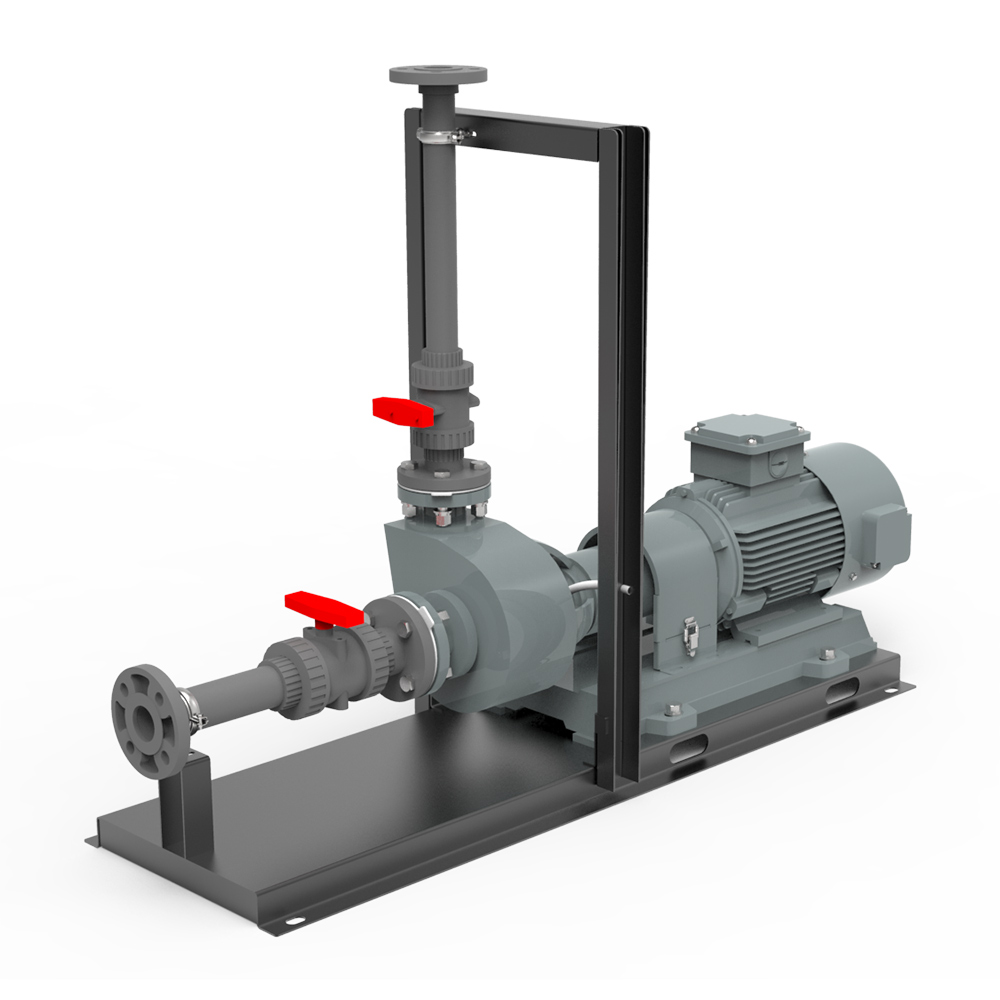
Wearable offers Chemical Pump solutions for industrial fluid-handling applications. When evaluating a suitable model, its construction and material configuration should be considered alongside the chemical medium, operating temperature, flow requirements, and system pressure.
For applications involving aggressive fluids, selecting a corrosion-resistant chemical pump is an important starting point. However, corrosion resistance should always be verified against the specific fluid and temperature conditions rather than assumed from the product category alone.
This application-focused approach helps ensure that the selected pump meets both immediate process requirements and long-term reliability expectations.
Frequently Asked Questions
Can a corrosion-resistant chemical pump handle any high temperature?
No. Chemical resistance and temperature resistance are different material properties. Even when a material resists a particular chemical, its mechanical strength, pressure rating, or sealing components may limit its allowable operating temperature.
Does low temperature affect chemical pump material compatibility?
Yes. Low temperatures can reduce the flexibility of certain materials and affect elastomer sealing performance. Changes in fluid viscosity may also influence pump operation.
Should pump materials be reassessed when the process temperature changes?
Yes. A significant temperature change can alter material compatibility and operating conditions, even when the chemical composition remains the same. Reviewing the pump's wetted components and operating limits is recommended.
Matching Pump Materials to Real Operating Conditions
Temperature is not simply another number on a chemical pump specification sheet. It directly influences material behavior, sealing reliability, and the long-term performance of the equipment.
By evaluating temperature together with chemical concentration, pressure, and wetted-component compatibility, operators can make more informed pump selection decisions, reduce premature failures, and maintain reliable chemical transfer throughout the intended service life.
