

How Does Back Pressure Affect Digital Dosing Pump Accuracy?
For a digital dosing pump, setting the desired flow rate does not always mean the pump will deliver exactly that amount under every operating condition. One of the most important factors behind actual dosing performance is back pressure.
Back pressure is the pressure that the pump must overcome on the discharge side of the system. Changes in discharge pressure can affect diaphragm movement, valve operation, volumetric efficiency, and ultimately the actual amount of chemical delivered.
For industrial chemical dosing, understanding the relationship between back pressure and dosing accuracy is therefore essential for selecting, commissioning, and maintaining a reliable pump.
What Is Back Pressure in a Dosing Pump System?
Back pressure is the resistance against the pumped fluid at the discharge side of the dosing system.
It can come from several sources, including:
▶ Downstream process pressure
▶ Long or narrow discharge piping
▶ Valves, filters, and fittings
▶ Elevation differences
▶ Injection points with high system pressure
A digital dosing pump must generate enough pressure to move the chemical into the process while maintaining stable and repeatable dosing.
This is particularly important for diaphragm metering pumps because their performance depends on the pressure difference between the pump outlet and inlet.
How Does Back Pressure Affect Digital Dosing Pump Accuracy?
A dosing pump works by repeatedly moving a defined volume of liquid. However, the actual delivered volume can change when operating conditions change.
As back pressure increases, the pump has to work against greater resistance. If the pump is operating close to or beyond its suitable pressure range, several performance changes may occur.
1. Reduced Actual Flow
A digital pump may be programmed for a specific flow rate, but the actual output can decrease if the operating pressure becomes too high for the selected configuration.
This means the value shown on the controller and the actual chemical delivery rate may no longer match.
For a process that depends on accurate chemical concentration, even a relatively small difference can become important over long operating periods.
2. Greater Pressure Differential
The pressure difference across the pump is a key operating condition.
A digital dosing pump does not simply need to overcome "pressure" in isolation. It needs to generate sufficient differential pressure to reliably move the chemical from the suction side to the injection point.
For this reason, pump selection should consider the required flow rate and actual discharge pressure together.
3. Changes in Valve Performance
Dosing pumps typically rely on inlet and outlet valves to control fluid movement.
If pressure conditions are unsuitable, valve opening and closing behavior can become less stable. This may contribute to fluctuations in delivered flow, especially when the pump is operating at a very low flow rate or under demanding process conditions.
4. Increased Mechanical Load
Higher discharge pressure also places greater demands on the pump's mechanical components.
If the pump is continuously operated outside its intended pressure range, components can experience additional stress and wear. This can eventually affect repeatability and maintenance intervals.
Why Is Pressure Calibration Important for Accurate Dosing?
A digital dosing pump should be evaluated under conditions that resemble its actual installation.
For example, testing a pump with water at low pressure does not necessarily represent how it will perform when dosing a chemical into a pressurized process line.
The product specifications for one Wearable digital dosing pump, for example, list a maximum operating pressure of 7 bar, with repeatability accuracy specified at ±0.1–0.5% FS for the listed model. The manufacturer also notes that its test data is based on water at 20°C and specific test conditions.
This illustrates an important engineering principle:
A pump's published performance should always be interpreted together with its test conditions and actual application requirements.
What Happens When Back Pressure Is Too High?
Operating a dosing pump at excessive back pressure can cause more than a small reduction in flow.
The potential symptoms include:
| Symptom | Possible Pressure-Related Cause |
|---|---|
| Actual flow is lower than the set value | Excessive discharge pressure |
| Dosing becomes inconsistent | Unstable pressure or valve behavior |
| Pump runs under high load | Excessive differential pressure |
| Increased component wear | Continuous operation near pressure limits |
| Chemical concentration is incorrect | Actual dosing rate differs from the target |
However, these symptoms do not prove that back pressure is the only cause. Air in the dosing line, incorrect calibration, chemical viscosity, suction problems, blocked valves, and worn components can also affect dosing accuracy.
A proper diagnosis should therefore consider the complete dosing system.
How Can You Maintain Dosing Accuracy Under Different Back Pressures?
The goal is not simply to reduce back pressure as much as possible. The system should provide a stable and predictable pressure environment within the pump's rated operating range.
Several practical measures can help:
Select the Pump According to Actual Operating Pressure
Do not size a pump only according to its maximum flow rate.
The required flow rate should be evaluated together with:
▶ Discharge pressure
▶ Suction conditions
▶ Chemical properties
▶ Operating temperature
▶ Required dosing accuracy
A pump with a large nominal flow capacity may still be unsuitable if its pressure capability does not match the application.
Keep the Discharge System Stable
Sudden pressure changes can make precise chemical dosing more difficult.
Pipeline design, valves, filters, injection points, and other components should therefore be considered when evaluating system pressure.
Where required, a properly selected back pressure valve can help establish a controlled pressure condition. The manufacturer of the referenced digital dosing pump specifically notes that pressure differential can be increased by adding a back pressure valve at the outlet.
Verify Actual Flow During Commissioning
The programmed flow rate should not automatically be treated as the actual delivered flow.
During commissioning, measuring the real chemical output under operating pressure can help identify differences between the pump setting and actual performance.
This is especially useful when the application requires precise dosing of coagulants, disinfectants, pH-control chemicals, or other process additives.
Does Higher Back Pressure Always Mean Lower Accuracy?
Not necessarily.
A digital dosing pump is designed to operate within a defined pressure range. Within an appropriate operating range, the pump can maintain stable and repeatable dosing.
The problem occurs when the actual operating conditions move outside the pump's suitable range or become unstable.
In other words:
Back pressure itself is not necessarily a problem. Uncontrolled or excessive back pressure is.
This distinction is important when evaluating dosing pump performance.
How Do Digital Features Help Manage Pressure-Related Problems?
Modern digital chemical dosing pumps can provide more information about operating conditions than conventional pumps.
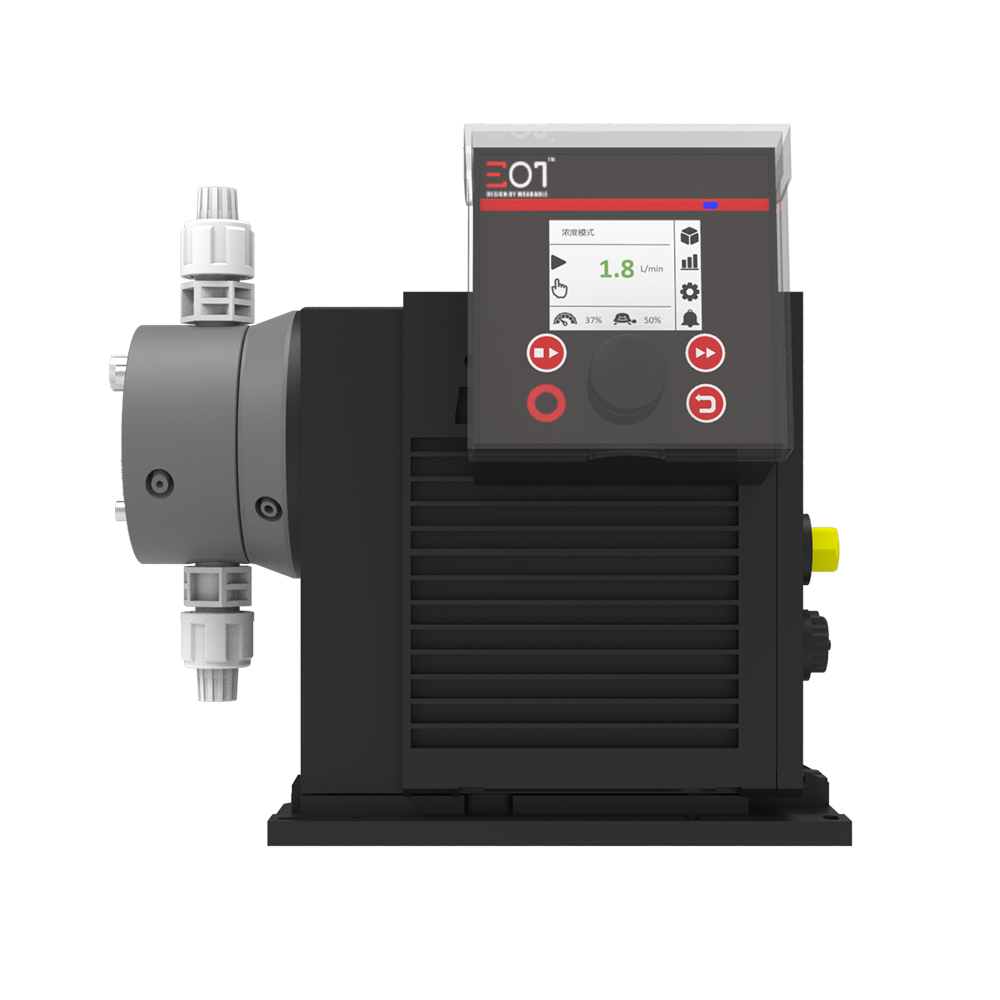
For example, the referenced Wearable digital dosing pump uses a pressure sensor to continuously monitor pipeline pressure and can provide alarms when abnormal conditions are detected. Its system also monitors conditions such as diaphragm status, bubbles, and pipeline blockage.
These functions can help operators identify abnormal operating conditions before they develop into larger dosing problems.
The pump also supports different control modes, including manual, concentration, impulse, batch, and current-based control. This allows the dosing strategy to be adapted to different process requirements.
Back Pressure vs Other Factors Affecting Dosing Accuracy
Back pressure is important, but it is only one part of the accuracy equation.
A practical dosing pump selection and troubleshooting process should also consider chemical viscosity, suction conditions, calibration, temperature, air bubbles, valve condition, and pump wear.
For example, a pump may appear to have a pressure problem when the actual cause is an air pocket in the suction line. Similarly, a change in chemical concentration can alter viscosity and affect the actual dosing rate.
This is why troubleshooting should begin with the complete operating condition rather than immediately replacing the pump.
How to Choose a Digital Dosing Pump for High-Pressure Applications
When selecting a pump for a pressurized chemical injection system, start with the actual process requirements rather than the pump's maximum specifications.
The most useful information to provide to a pump manufacturer includes:
Chemical type + concentration + required flow + discharge pressure + suction conditions + temperature + viscosity + required accuracy
The pump's maximum operating pressure should then be compared with the actual continuous operating pressure, rather than treating the maximum rating as a recommended everyday operating point.
For demanding applications, it is also worth considering pressure monitoring, automatic alarms, flow verification, and external control capabilities.
The Right Pressure Conditions Support Accurate Chemical Dosing
Back pressure has a direct relationship with the performance of a digital dosing pump. If discharge pressure becomes excessive or unstable, the actual delivered flow may differ from the programmed value, potentially affecting chemical concentration and process control.
Reliable dosing therefore requires more than a highly accurate pump. The entire system needs to be designed around compatible flow rate, pressure, chemical properties, piping conditions, and control requirements.
For applications where pressure conditions can change, a digital dosing pump with pressure monitoring and intelligent control functions can provide additional visibility into system operation. Wearable's digital dosing pump range includes pressure monitoring, multiple control modes, and automatic functions designed for precise chemical dosing applications.
Ultimately, the key is to select and operate the pump according to the actual pressure differential of the process, rather than relying only on the programmed flow rate or nominal pump capacity.
