

Digital Dosing Pumps in Wastewater Treatment: Accuracy and Compliance
In wastewater treatment, many people focus on plant capacity and equipment size, yet overlook one critical factor that ultimately determines performance — the precision of chemical dosing . Whether in municipal wastewater plants or industrial effluent systems, long-term discharge compliance depends largely on whether every chemical injection is accurately controlled.
As environmental regulations become increasingly stringent, companies are no longer evaluated simply on whether they meet standards once. They must demonstrate that they can consistently, stably, and verifiably remain compliant . Under this pressure, the limitations of traditional dosing methods are becoming more evident.
From “Experience-Based Dosing” to “Precision Control”
In many conventional systems, chemical dosing relies on manual adjustments or basic mechanical settings. Operators modify flow rates based on observation and experience. However, this approach often leads to delayed responses when water quality fluctuates, and pipeline pressure changes can easily affect the actual dosing volume. Over time, maintaining consistent results becomes difficult.
More importantly, overdosing does not necessarily increase safety. Excessive chemicals raise operating costs, increase sludge production, and may even create secondary treatment issues. Insufficient dosing, on the other hand, risks non-compliance and regulatory penalties.
What wastewater treatment truly requires is not “more,” but “exactly enough.” This is where digital dosing pump systems redefine the process — transforming subjective judgment into data-driven control.
How Digital Dosing Pumps Deliver True Accuracy
A digital dosing pump is not simply a pump with a display screen. Its core advantage lies in intelligent control logic and stable flow regulation mechanisms .
First, digital systems allow users to set precise flow parameters. Internal algorithms maintain consistent output, automatically compensating for pressure fluctuations within the pipeline. This stability is particularly critical for processes such as pH adjustment and coagulation, where chemical reactions are highly sensitive to dosage accuracy.
Second, many digital dosing pumps support proportional dosing modes. When influent flow rates change, the chemical injection volume automatically adjusts according to a predefined ratio. This dynamic matching capability is especially valuable in industrial wastewater treatment, where water quality and flow conditions may vary significantly.
Equally important is the smoothness of delivery. Stable, low-pulsation output ensures that chemicals disperse evenly throughout the water, improving reaction efficiency while reducing the risk of localized overconcentration.
With digital technology, precision becomes programmable, repeatable, and verifiable — no longer dependent on operator experience alone.
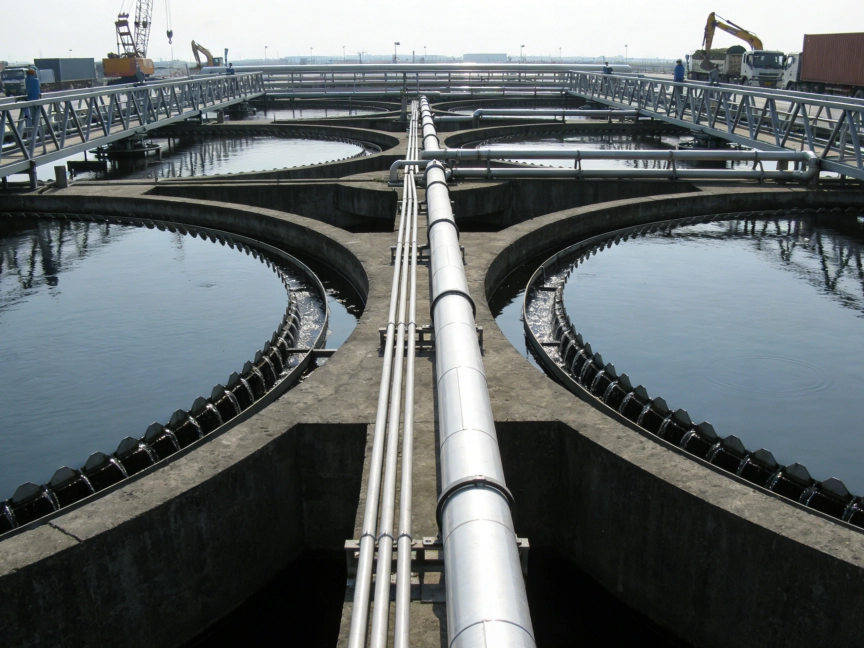
Compliance Is Not Just an Outcome — It Is a Managed Process
In today’s regulatory environment, compliance means more than simply achieving acceptable discharge results. It requires proof that operational processes are under control.
Digital dosing pump systems support this requirement through connectivity and data management. By integrating with PLC or SCADA systems, dosing data can be recorded and monitored in real time. Injection volumes, operating status, and alarm records are all traceable. During environmental inspections or internal audits, companies can provide documented evidence of stable operation rather than relying solely on final test results.
Additionally, automatic alarm and fault detection functions significantly reduce human error. If abnormal flow rates or system failures occur, the pump immediately alerts operators, minimizing the risk of prolonged deviations.
True compliance is built on stability — and the ability to prove that stability.
The Long-Term Economic Value of Precision Control
When considering equipment upgrades, buyers often focus primarily on initial purchase costs. However, from a long-term operational perspective, the savings generated by precise dosing can be substantial.
Accurate dosing helps to:
- Reduce chemical waste
- Lower sludge treatment costs
- Minimize manual intervention
- Extend the lifespan of pipelines and related equipment
Over time, these operational efficiencies often outweigh the initial investment. Precision is not merely a technical advantage — it is a cost-control strategy.
Typical Application Scenarios
To better understand the practical value of digital dosing pumps, consider several common scenarios:
1. Municipal Wastewater Plant Upgrades
Older systems often experience unstable output. Digital upgrades significantly improve compliance consistency.
2. Industrial Wastewater Treatment
In chemical or manufacturing industries where wastewater characteristics fluctuate frequently, proportional dosing effectively adapts to flow variations.
3. New Industrial Park Treatment Facilities
Implementing digital dosing systems from the planning stage supports full automation and data-driven management.
4. Compact Integrated Treatment Units
Where space is limited, compact digital dosing pumps provide high-precision solutions without sacrificing performance.
Although each scenario presents unique requirements, the common need remains the same — stable, precise, and controllable chemical dosing.
The future of wastewater treatment will increasingly emphasize automation, digitalization, and refined process control. A digital dosing pump is not merely an equipment upgrade; it represents a shift toward smarter management.
In , precision is no longer a competitive advantage — it is a fundamental requirement. Compliance is not simply an outcome, but a continuously controlled and documented process.
