

Digital Dosing Pump System vs Traditional Dosing Pump: Which Solution Is Better?
In many industrial processes, chemical dosing is a critical step that directly affects production efficiency, product quality, and operating costs. A traditional single dosing pump can complete basic chemical transfer and injection tasks, making it suitable for simple and stable applications. However, as industrial processes become more automated and demanding, many companies find that a single pump is no longer enough to maintain consistent dosing performance.
A Digital dosing pump system provides a more complete solution by combining precise pump control, monitoring functions, and automated adjustment capabilities. Instead of only delivering chemicals at a fixed rate, it can respond to real-time process changes and help companies achieve more accurate, efficient, and reliable chemical management.
Single Dosing Pump vs Digital Dosing Pump System: What Is the Difference?
A single dosing pump mainly focuses on one task: delivering a specific amount of chemical from the storage tank to the process line. For applications with stable conditions, such as fixed chemical addition in small water treatment systems, this approach can be simple and cost-effective.
However, industrial processes are rarely completely stable. Flow rates, chemical concentrations, and production conditions may change throughout operation. When using a traditional pump, operators often need to manually adjust parameters according to experience, which can lead to inconsistent dosing and unnecessary chemical consumption.
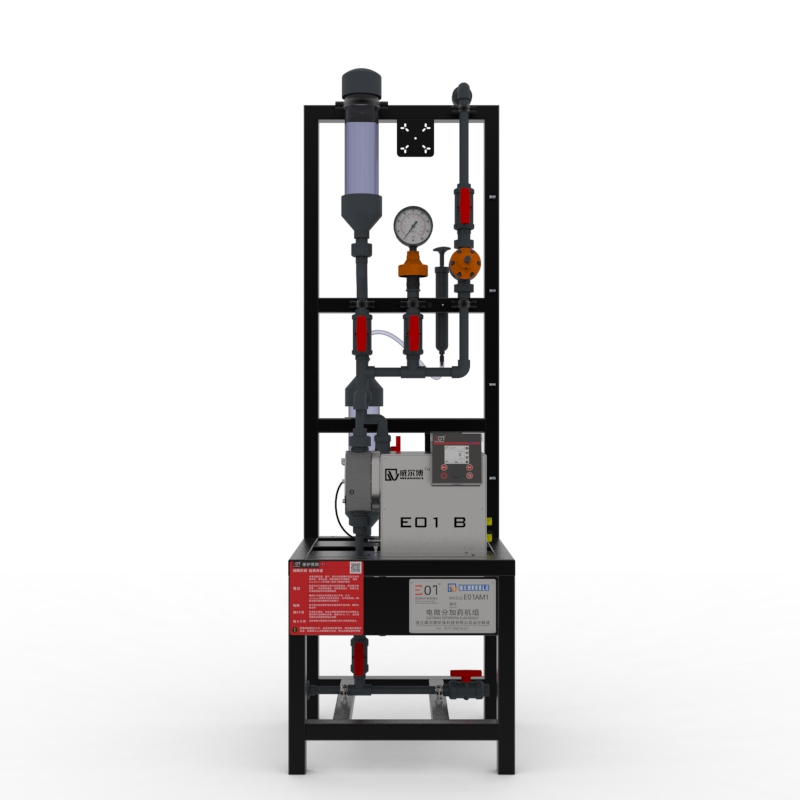
A Digital dosing pump system works as an integrated solution rather than an independent pump. It combines a digital dosing pump with control units, sensors, and monitoring functions to create a more intelligent chemical injection process. The system can adjust dosing parameters automatically based on actual operating conditions, improving both accuracy and efficiency.
Why Upgrade to a Digital Dosing Pump System?
More Accurate Dosing and Lower Chemical Waste
One of the biggest advantages of upgrading to a Digital dosing pump system is improved dosing accuracy.
In traditional systems, operators often set a fixed dosing rate based on average operating conditions. However, actual production conditions can fluctuate. For example, wastewater quality may change throughout the day, requiring different amounts of treatment chemicals. A fixed dosing setting may result in overdosing during low-demand periods or insufficient chemical addition during high-demand periods.
A digital system can adjust output according to process feedback, helping maintain the correct chemical concentration while reducing unnecessary consumption.
For companies using expensive chemicals, even a small improvement in dosing accuracy can create significant savings over time.
Reduced Manual Adjustment and Improved Automation
Many factories still rely on operators to regularly check chemical levels and adjust dosing parameters manually. Although this method can work, it requires continuous labor involvement and may introduce human errors.
A Digital dosing pump system allows more automated operation through intelligent control functions. Depending on the configuration, the system can monitor operating conditions, adjust dosing output, and provide alerts when abnormal situations occur.
From a user's perspective, one of the biggest improvements after upgrading is not simply better accuracy, but easier daily operation. Instead of constantly checking whether the pump is running correctly, operators can focus on overall process management.
More Stable Performance in Complex Industrial Applications
Industrial processes often involve changing conditions. Chemical viscosity, temperature, production speed, and fluid flow can all affect dosing performance.
A single dosing pump may struggle to maintain stable output when conditions change frequently. In contrast, a Digital dosing pump system provides better adaptability by allowing precise adjustments and more consistent chemical injection.
This is particularly valuable in industries where even small dosing errors can affect final product quality, such as chemical manufacturing, wastewater treatment, and new energy production.
Better Monitoring and Easier Maintenance
Another important advantage of digital systems is improved visibility.
Traditional pumps usually provide limited operating information, meaning maintenance teams may only discover problems after performance has already declined.
With digital control technology, users can monitor important operating parameters, record system performance, and identify potential issues earlier. This helps reduce unexpected downtime and makes preventive maintenance easier.
For industrial users looking for long-term reliability, this additional control capability is often worth the investment.
Practical Application Example: Improving Chemical Efficiency in Wastewater Treatment
A wastewater treatment facility was previously using a conventional dosing pump with a fixed chemical injection rate. Because incoming wastewater characteristics changed throughout the day, operators frequently adjusted the dosing amount manually to maintain treatment performance.
During peak production periods, the facility increased chemical dosage as a safety measure. However, this resulted in excessive chemical consumption during lower-load periods. The plant recorded unstable dosing performance and spent approximately 15% more on treatment chemicals than expected.
After upgrading to a Digital dosing pump system, the facility integrated flow monitoring and automatic dosing adjustment. The system could modify chemical injection according to real-time wastewater conditions instead of relying on fixed settings.
After several months of operation, the plant achieved more stable water quality, reduced manual adjustments by around 50%, and lowered chemical consumption by approximately 10–15%.
This example shows that the value of a digital dosing system is not only higher accuracy, but also better control over the entire treatment process.
Why Choose a Professional Digital Dosing Pump System?
When selecting a digital dosing solution, the pump itself is only one part of the overall system. Compatibility, control functions, reliability, and application experience are equally important.
Our Digital dosing pump system is designed for industrial applications that require accurate chemical injection and stable operation. With precise digital control, flexible adjustment options, and reliable performance, it can be applied in areas such as wastewater treatment, chemical processing, new energy manufacturing, and industrial production.
For customers who want to move from manual adjustment to smarter chemical management, a well-designed digital dosing solution can provide long-term operational benefits.
Is a Digital Dosing Pump System Right for Your Application?
A single dosing pump may still be a suitable choice for simple processes with stable conditions. However, when a facility requires higher accuracy, reduced chemical waste, and automated control, upgrading to a Digital dosing pump system becomes a more effective solution.
The goal of modern chemical dosing is no longer just to deliver chemicals from one point to another. It is about achieving precise control, improving efficiency, and creating a more reliable production process. By investing in a digital dosing system, companies can reduce operating costs while gaining better control over their most important industrial processes.
